
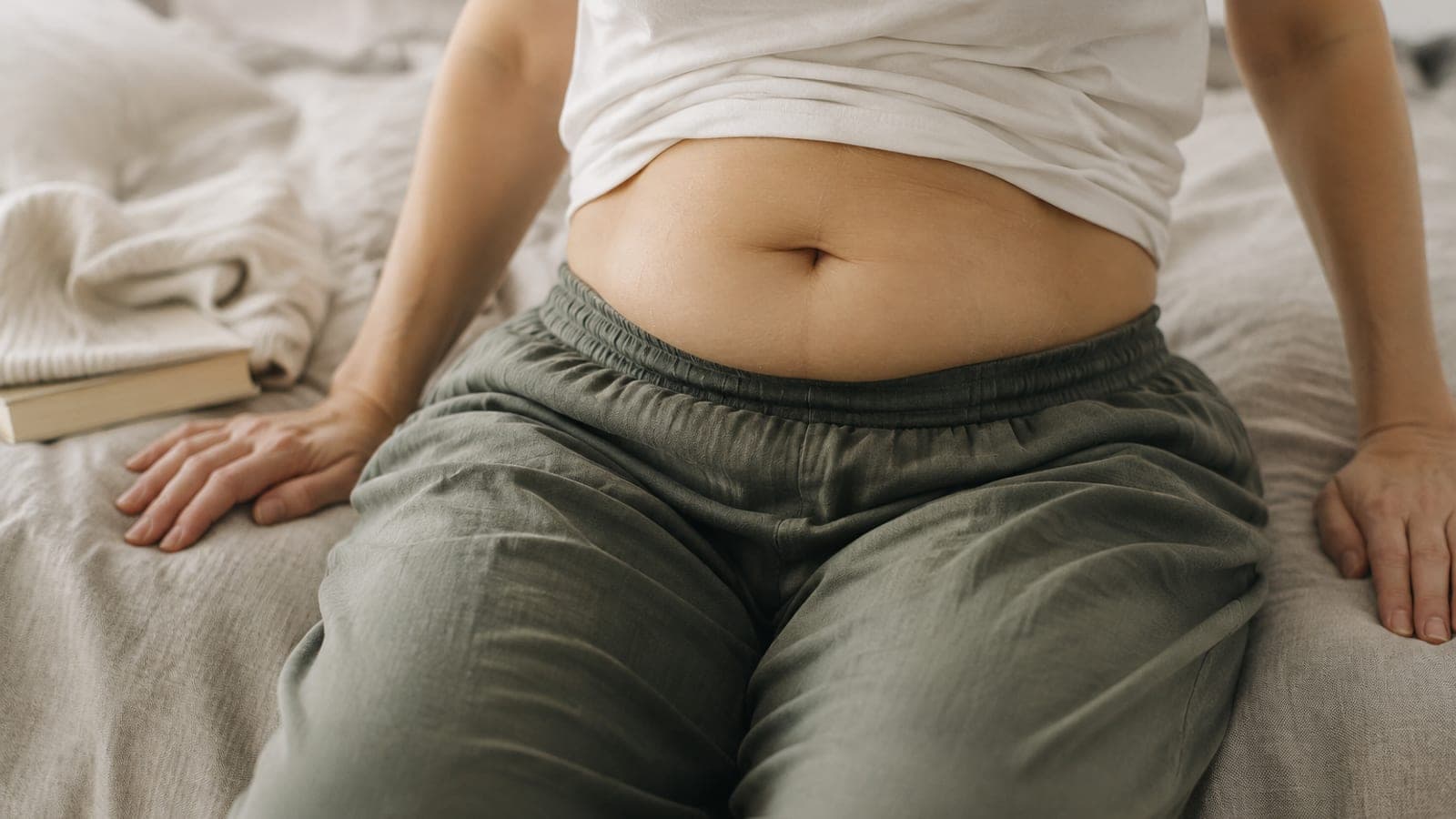
No treatment replaces diet and exercise, and aesthetic medicine supports the process rather than being a shortcut through it. Treatments make sense once your weight is stable and localised fat or cellulite still remains. Below: where to start, when a treatment genuinely makes sense, how LPG endermologie and cryolipolysis work, and a summary of which one suits what.

Before you think about a treatment: diet
If, despite intense effort, you are not happy with your body, the first address is not a treatment room but a dietitian — or possibly a session of dietary coaching.
Also worth considering is a genetic test, which makes it possible to check how the genes influence metabolism and what supplementation is worth using.
Sometimes one thing is enough: achieving a calorie deficit, that is, burning more calories than you take in with food. A properly balanced reduction diet plus exercise that burns fat can work wonders.
It is good to train under the eye of a personal trainer who will build a plan for you rather than for an average.
One more distinction worth knowing before you start measuring the fold on your stomach. The treatments described below act only on subcutaneous fat — the kind you can take between your fingers. They do not act on visceral fat surrounding the organs inside the abdominal cavity, and it is that fat which is responsible for metabolic and cardiovascular risk. Only diet, exercise and sleep act on the visceral kind. That is why in some people a hard stomach that cannot be pinched is not an indication for a treatment at all.
When a treatment makes sense
Sometimes, despite the right diet and exercise, results come slowly. Or there remain places from which the excess fat simply does not want to disappear.
And that is the right moment for aesthetic medicine. Not instead of working on your body — after it. The treatments we write about below are a tool for closing the effect, not for replacing it.
LPG endermologie — an ally during weight loss
To patients who are only starting to work on their figure we recommend one thing straight away: take care of the firmness of the skin during the weight-loss course, not after it.
The reason is practical. After rapid weight loss you may notice a drop in skin density and increased visibility of cellulite.
LPG endermologie is a vacuum massage acting on the skin and the subcutaneous fatty tissue. It stimulates microcirculation, helps remove water retention and improves the appearance of orange-peel skin.
For physically active people it has an added advantage: it massages the muscles and speeds up their regeneration.
Coolshaping cryolipolysis
For local reduction of stubborn fatty tissue we today use Coolshaping cryolipolysis — non-invasive reduction with controlled cold. We work on the firmness of the skin with LPG Alliance® endermologie and shockwave therapy.
What to expect from cryolipolysis. In the treated area the layer of fatty tissue usually decreases by roughly a fifth, and the effect builds over two to three months — this is not a treatment with an effect the next day. For a few days to a few weeks the area can be numb and tender. Very rarely, in fewer than one person in four hundred, instead of a reduction a hard thickening of the fatty tissue appears in the treated area; it does not resolve on its own and requires surgery — which is why we mention it before, not after.
Which treatment for what — in brief
- Coolshaping cryolipolysis — Reduction of fatty tissue with controlled cold · Stubborn fatty tissue · According to the plan agreed at the consultation.
Finally
If you were to take one thing away from this text, let it be the order.
First the diagnosis and the plan — best with a dietitian involved. Then consistent work: diet, exercise, regularity. And only at the end a treatment that closes what could not be achieved by the work alone.
And the thing almost every patient asks about: will the fat come back. The fat cells removed in the treated area do not regenerate, but the ones that remain — and those in the other parts of the body — get larger as body weight increases. That is why the effect lasts as long as the weight is stable. The treatment does not release you from anything; it only changes the proportions in a place that diet alone did not shift.
The reverse order is also possible — but what for. A treatment carried out without changing habits solves the problem in one place and for a while. Changing habits plus a treatment solves it for longer.
We reduce local fatty tissue with cryolipolysis. We will discuss the details at the consultation.
W naszych klinikach
What we can do about it
Zabiegi
- Coolshaping 2 360 CryolipolysisCoolshaping 2 360° cryolipolysis is a non-invasive reduction of stubborn fatty tissue through controlled cooling — without a scalpel or recovery.
- Endermologia LPG Alliance® – body slimmingEndermologia LPG Alliance® is a non-invasive mechanical massage that supports body contouring, cellulite reduction and skin firming.
Nie wiesz, który zabieg będzie właściwy? Cosmetology Consultation — dobierzemy metodę do Twojej skóry.
Sources
- Deoxycholic acid in the submental fat reduction: A review of properties, adverse effects, and complications — PubMed.
- Management of Serious Adverse Events Following Deoxycholic Acid Injection for Submental and Jowl Fat Reduction: A Systematic Review and Management Recommendations — PMC.
- Incidence of Paradoxical Adipose Hyperplasia After Cryolipolysis: A Systematic Review and Meta-Analysis — PubMed.
- Paradoxical Adipose Hyperplasia — StatPearls.
- Cellulite: an evidence-based review — PubMed.
- Application of cryolipolysis in adipose tissue: A systematic review — PubMed.
Last updated: 28 sierpnia 2026