
Warts, verrucas and seborrhoeic lesions — how to tell them apart and what to do about them
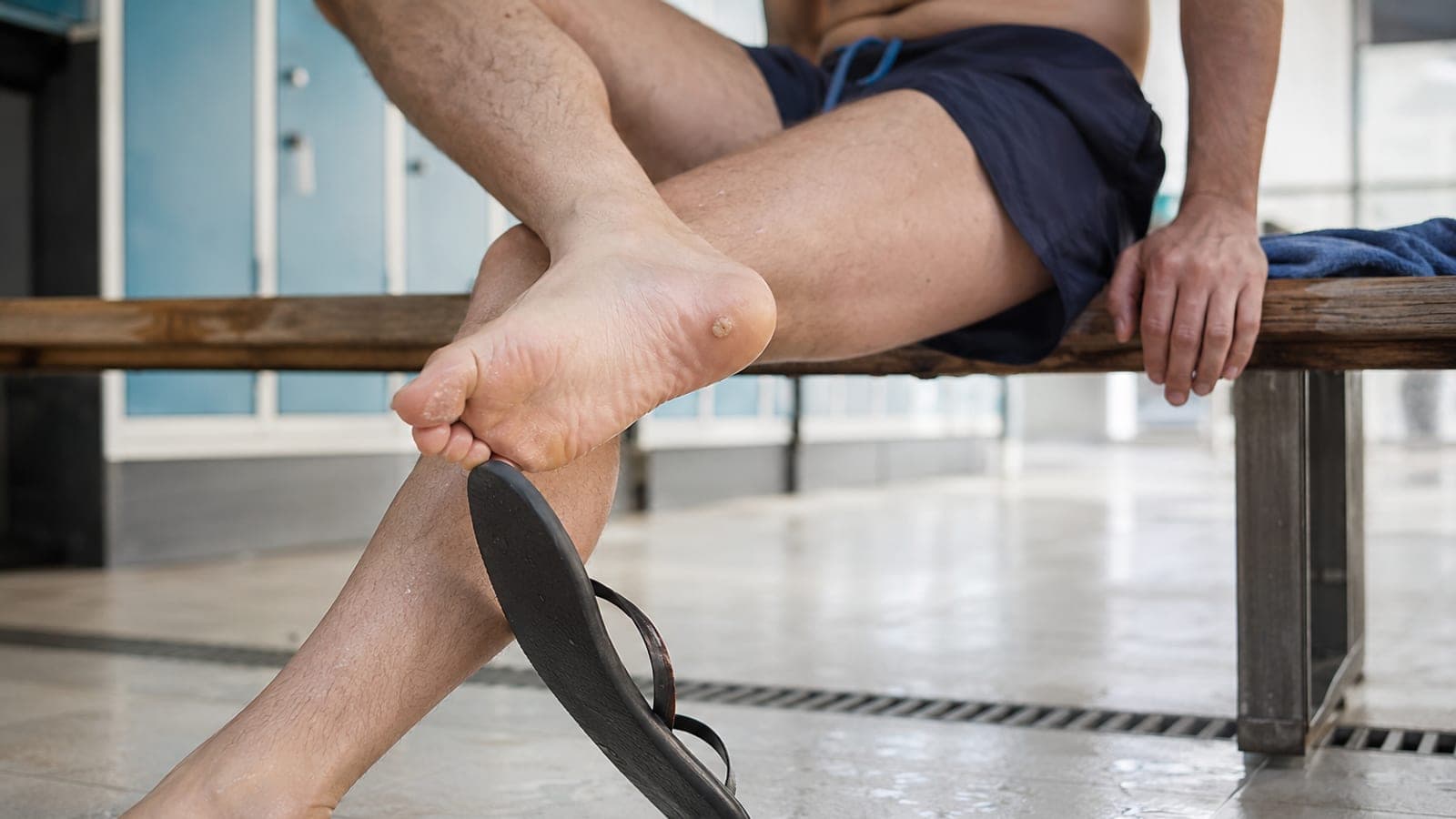
One name covers two completely different lesions. Viral warts, or verrucas, are caused by HPV and can be caught from someone else — at a swimming pool, for example. Seborrhoeic keratoses appear mainly after fifty, are benign and have nothing to do with the virus. They are treated in completely different ways, so below: how to tell them apart, why a verruca on the foot hurts so much, how removal works and what to do when a lesion appears on a child.

What a wart actually is
It is a papular skin lesion with a broad base and a keratinised, uneven surface. It usually does not hurt — unless it sits somewhere we press on with our whole body weight every day.
The most common culprit is the human papillomavirus (HPV) — or rather a whole group of more than 180 of its types. Infection is very common and usually goes unnoticed: skin warts are found in anywhere from a few to over thirty percent of school-age children. It is responsible for viral warts, the ones everyone knows as verrucas.
But there is a second family of lesions — and this is where the most common misunderstanding begins.

Seborrhoeic keratosis: looks alarming, but is not contagious
It appears mainly after the age of fifty. Raised, brown, with a wrinkled surface. It looks worrying, and that is why it is the most common reason people come to the clinic.
The good news: it is a benign lesion and you cannot catch it. It has nothing to do with HPV — it develops on its own, most often where the skin has been exposed to the sun for years.
The problem tends to be practical rather than medical. On the face it is a cosmetic nuisance; on the neck or shoulders it can catch on clothing and become irritated with every movement.
There is one situation in which seborrhoeic warts call for an urgent appointment — and it is not about the appearance of a single lesion. If a great many of them suddenly appear in a short time, often with itching, this can be a signal of a disease going on inside the body and it calls for diagnosis, not for removal of the lesions. If you notice such a wave of new lesions, tell the doctor about it directly.
Verrucas — not only on the feet
HPV infection takes several different forms:
- Common warts — rough, skin-coloured papules, most often on the fingers and around the nails. Sometimes they grow under the nail plate and then become troublesome.
- Plane warts — small, smooth, barely raised above the skin. They occur mainly in teenagers, hence the old name "juvenile warts".
- Genital warts (condylomata acuminata) — lesions in the genital area, caused by HPV-6 and HPV-11 and transmitted sexually. They require a visit to a doctor, not home experiments.
Why a verruca on the foot hurts so much
Because it is the only one we crush with our own weight every day.
It comes in two forms: deep and disseminated, and superficial, mosaic. In both, several different types of the virus are found — in the deep form most often HPV-1 — and identifying the type changes nothing in the treatment anyway. The first is more common and causes the most trouble — a burning pain when walking that in time changes the way you place your foot.
You usually pick up the infection barefoot: at the swimming pool, in the changing room, in the gym shower.
How warts are removed
There are several methods and not every one suits every lesion. The choice is made by the doctor after examining the skin — a verruca on the heel is approached differently from a seborrhoeic keratosis on the eyelid.
What we do in our clinics:
- Cryosurgery — Freezing the lesion off with liquid nitrogen · Viral warts and seborrhoeic keratoses. Several repeat sessions are usually needed, and the very low temperature can make the procedure unpleasant.
- Curettage — Mechanical removal of the lesion with a special curette · Lesions raised above the skin, with no need for sutures.
- Plasma — Vaporising the lesion with a beam of energy, without touching the skin · Small lesions in places that require precision — the eyelids and the area around the eyes.
- CO₂ laser — Vaporising the tissue layer by layer · Like plasma: precision and minimal bleeding.
- Surgical excision — Removal with a scalpel · Larger or recurring lesions, or those requiring histopathological examination.
Surgical excision has one advantage worth knowing about: the removed lesion can be sent for histopathological examination so you can be certain what you were dealing with.
What you will not find with us: electrocoagulation, or over-the-counter chemical preparations with salicylic or lactic acid. Preparations with salicylic acid have the best documented effectiveness of all the home methods and they are safe — they are not used, however, on the face, the eyelids and mucous membranes, or on lesions where the diagnosis is not certain. That is precisely why we show the lesion to a doctor first.
In fairness it has to be added that not every wart needs a procedure. Salicylic acid works, but it calls for patience: it has to be applied every day for several weeks, filing down the hardened layer each time. In return it is cheap, painless and has few side effects — in studies it clears the wart in half to two thirds of people.
A verruca often disappears on its own, leaving no trace — about two thirds of warts clear without treatment within two years, and in children the proportions are even higher — of eleven-year-olds with warts, only a few percent still had them five years later. You do need to know, though, that it can take months, and in that time the lesion spreads to other places. That is why in a small child with a single, painless lesion, watchful waiting is a justified decision, and we consider a procedure when the wart hurts, gets in the way of walking or multiplies quickly.
Verrucas in children — the doctor first, the pharmacy second
Children pick up HPV wherever they go barefoot: the pool, the changing room, the gym. So the first step is trivial and effective — flip-flops.
Before you reach for anything from the pharmacy, show the lesion to a doctor. Not because over-the-counter preparations are dangerous — in children salicylic acid is in fact a recommended method, because it works and does not hurt. The point is to be certain what we are dealing with before we start doing anything.
One note about how telling the lesions apart actually works. The doctor examines the skin with a dermatoscope — it is painless and takes a moment, and it makes it possible to distinguish a seborrhoeic wart from a melanoma, which can imitate it. Under the dermatoscope a seborrhoeic wart has the characteristic look of a lesion that seems stuck onto the skin; a melanoma looks quite different. If the picture is not clear-cut, the lesion is excised and sent for histopathological examination. That is the right order — otherwise, after the procedure, no material is left to examine.
When not to put off an appointment
Not everything that looks like a wart is one. Book an appointment with a dermatologist if:
- you are not sure what the lesion is
- the lesion is growing or changing shape or colour
- bleeding, pain or inflammation has appeared
- the lesions are multiplying quickly
- the lesion is on a child
This is not an invitation to panic — most warts are completely harmless. But telling a benign lesion from one that needs attention takes a doctor a few minutes. Guessing on your own can take months.
If you want to get rid of a wart — viral or seborrhoeic — in our clinics we remove them using non-surgical methods: cryosurgery, curettage, plasma or the CO₂ laser, from 500 zł. Lesions that raise any doubt we excise surgically with histopathological examination.
W naszych klinikach
What we can do about it
Zabiegi
- Non-surgical removal of skin lesionsNon-surgical removal of skin lesions comprises scalpel-free methods – cryosurgery, curettage, plasma, and CO₂ laser – allowing safe removal of benign warts, fibromas, or seborrheic lesions after a medical qualification.
- Surgical removal of skin lesionsSurgical removal of skin lesions is scalpel excision of the lesion with the option of histopathological examination, providing oncological safety and allowing care for an aesthetic scar appearance.
Nie wiesz, który zabieg będzie właściwy? Dermatology consultation — dobierzemy metodę do Twojej skóry.
Sources
Last updated: 14 sierpnia 2026